
BOOK ONLINE
Skip to content
Home » Blog » Lymphatic Massage » Back-to-School Colds Are Coming: What Does Your Lymphatic System Have to Do With It?

Back-to-School Colds Are Coming: What Does Your Lymphatic System Have to Do With It?

several kids with backpacks in a classroom facing the chalkboard

It’s almost back-to-school time—and that means more than new teachers, new shoes and new routines.

It also means colds.

When hundreds of children spend hours together in classrooms, sharing toys, desks, sports equipment and the occasional sneeze, respiratory viruses have plenty of opportunities to travel.

We all know the basics for staying healthy: get enough sleep, eat well, wash your hands and stay home when you’re sick.

But there is another system in your body that plays an important role in how your immune system works: your lymphatic system.

Your lymphatic system is part of your immune system

Most people think of the lymphatic system as the body’s drainage system—and it certainly helps return excess fluid from our tissues back into circulation.

But it does much more.
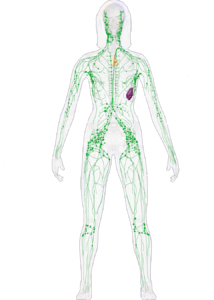
Your lymphatic vessels transport immune cells and foreign material from tissues to lymph nodes. The lymph nodes act as important meeting places where immune cells can identify and respond to potential threats.

In other words, your lymphatic system is an important part of your body’s immune surveillance network.

Modern research has confirmed just how closely connected the lymphatic and immune systems are.

Where does Manual Lymph Drainage come in?

Manual Lymph Drainage (MLD) was developed by Dr. Emil Vodder and his wife, Estrid, in the 1930s.

Interestingly, respiratory illness was part of the story from the beginning.

While working in Cannes on the French Riviera, the Vodders treated many English visitors who were experiencing persistent colds and sinus problems. They noticed that many of these patients had enlarged lymph nodes in their necks.

This observation sparked Emil Vodder’s interest in the lymphatic system and contributed to his development of the gentle, rhythmic technique that became known as Manual Lymph Drainage.

What does MLD actually look like?

Unlike traditional massage, MLD uses very light, rhythmic movements of the skin rather than deep pressure into the muscles.
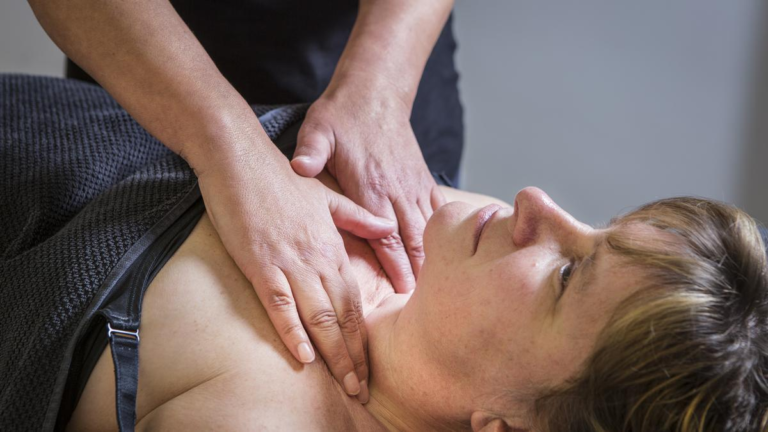
hands on a women neck as she receives MLD treatment

The gentle, rhythmic nature of Manual Lymph Drainage is quite different from traditional massage.

Today, we understand far more about the lymphatic system than we did in the 1930s. Research has demonstrated its important role in transporting immune cells and antigens and coordinating immune responses.

Research has also found measurable physiological effects following MLD, including studies that specifically examined the Dr. Vodder technique.

Can MLD prevent a cold or make it go away faster?

This is where we need to be honest about what the research does—and does not—tell us.

There is currently not enough clinical evidence to say that MLD prevents the common cold or shortens the number of days that someone is sick.

We do know that:

  • The lymphatic system plays an important role in immune function.
  • Lymphatic vessels transport immune cells and other material to lymph nodes.
  • MLD is designed to influence the lymphatic system.
  • Research has demonstrated measurable physiological effects following MLD.

But these findings do not prove that MLD can stop a virus or make a cold disappear faster.

And we think that’s an important distinction.

At Flow, we would rather tell you what the science actually shows than make promises that research hasn’t yet supported.

So why consider MLD during cold season?

MLD is an exceptionally gentle form of therapy. For people who already receive lymphatic care, maintaining their usual treatment plan may be one part of supporting their overall lymphatic health.

And when you’re feeling congested, tired or simply worn out, a gentle treatment can also be a welcome opportunity to slow down and relax.

MLD isn’t a substitute for rest, good nutrition, medical care or the other things that help you stay healthy.

But it works with a system that is already an important part of your body’s immune network.

Nearly 100 years later, we’re still learning

Emil Vodder began exploring the lymphatic system after noticing something unusual in people suffering from chronic respiratory problems.

Nearly a century later, modern research has confirmed that the lymphatic system is deeply connected to immunity.

We still don’t know whether MLD can change the course of an ordinary cold—and more research is needed to answer that question.

But we do know that your lymphatic system is an important part of how your body monitors and responds to the world around you.

And that’s a pretty good reason to appreciate your lymphatic system this back-to-school season.


References & Further Reading

  • Davis et al. (2025) — Transport and Immune Functions of the Lymphatic System (Annual Review of Physiology)

  • Randolph et al. (2017) — The Lymphatic System: Integral Roles in Immunity (Annual Review of Immunology)

  • Liao & von der Weid (2015) — Lymphatic System: An Active Pathway for Immune Protection (Seminars in Cell & Developmental Biology)

  • Río-González et al. (2020) — Effects of Different Neck Manual Lymphatic Drainage Maneuvers on the Nervous, Cardiovascular, Respiratory and Musculoskeletal Systems in Healthy Students (Journal of Clinical Medicine)

  • Williams (2010) — Manual lymphatic drainage: exploring the history and evidence base (British Journal of Community Nursing)

  • Kasseroller (1998) — The Vodder School: the Vodder method (Cancer)